Shorthand
expressions that are used when creating a film:
Distances:
XLS
– extreme long shot (establishing shot). A
shot in which the scale of the object shown is very small; a landscaper a
cityscape, or a crowd. Such an image is often used as an establishing shot.

VLS
– very long shot. Shows a lot of scenery and location, however a character is now a little bit more visible.

LS
– long shot. A shot that shows a character in his or her entirety, filling most
of the frame.

MLS
– medium long shot. The shot that shows character from the knees upwards.

MS
– mid shot. Shows the character from the waist up.

MSCU
– medium close up. Shows a character from the chest upwards.

CU
– close up. A shot in which the head of a person, or the entirety of a small
object is shown.


POV’S – point of view:
·
1st person
perspective – looking directly through somebody’s eyes

·
3rd person perspective
– over the shoulder shot

Camera movements:
TILT
– using a camera on a tripod, the camera moves up and down to follow the action.

PAN –

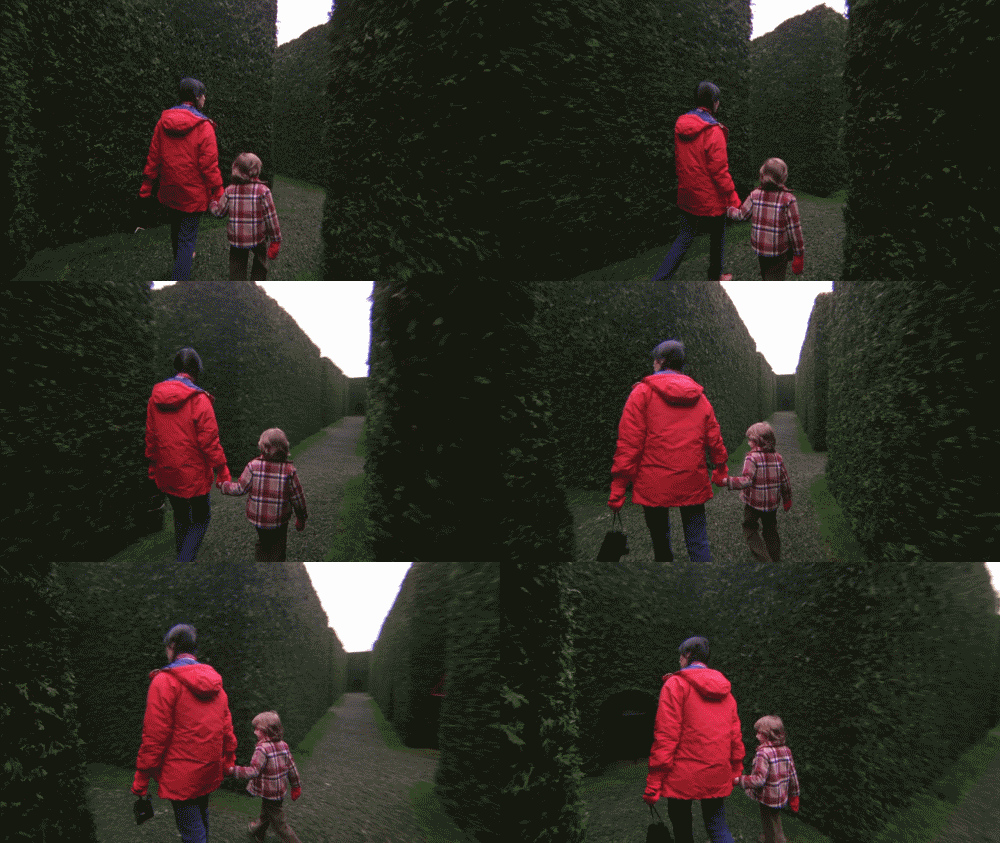
TRACKING
–
A
shot taken from a moving dolly (a platform on a set of wheels) that follows the
subject.
Camera angles:
High camera angle – makes the subject look weak and vulnerable

Low camera angle – makes the subject look important and powerful

Medium camera angle – camera placed at same height as the subject
(eye level)

Transitions:
DISSOLVE - a transition between two shots, where one shot fades away and simultaneously
another shot fades in.

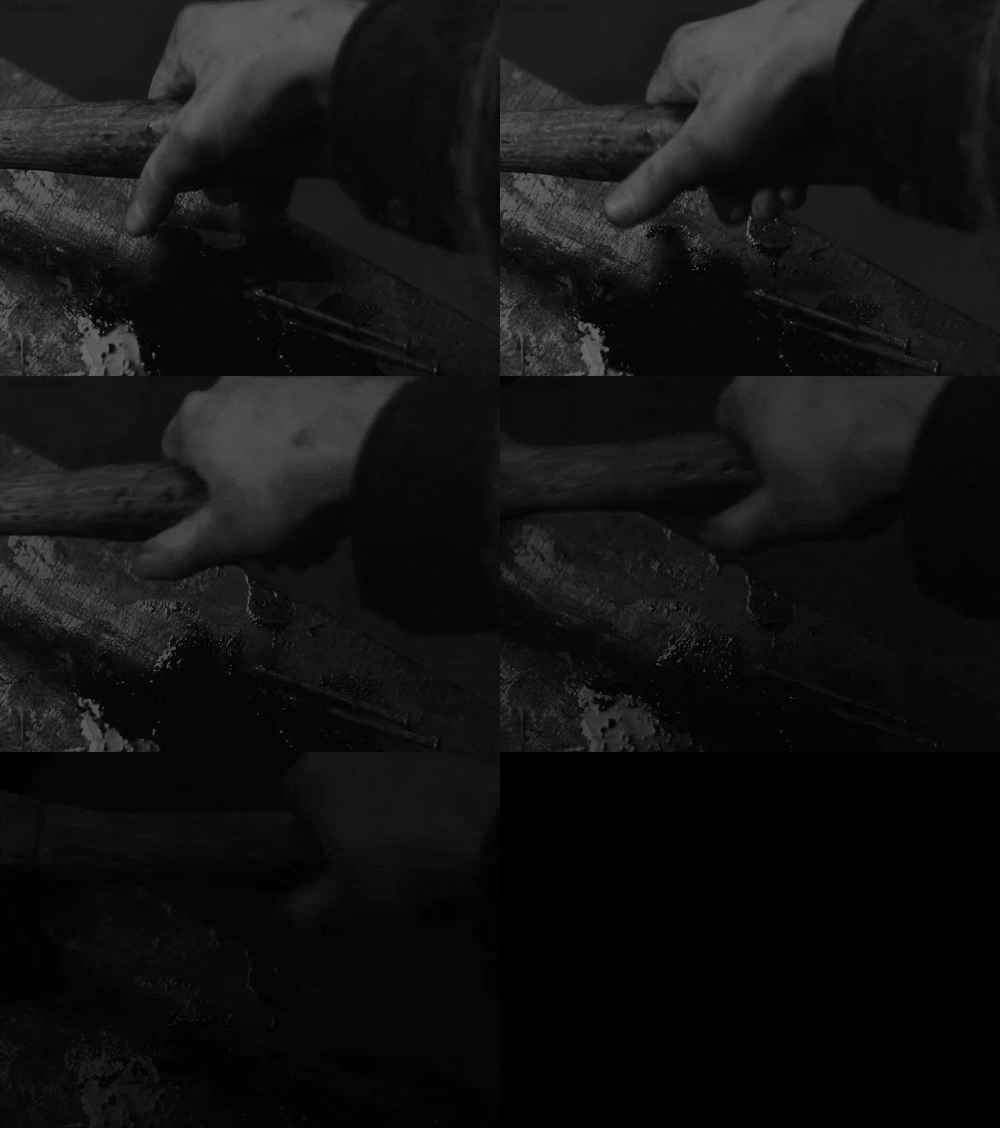
FADE
– a transition from a shot to black where the image gradually becomes darker is
Fade Out; or from black were the image gradually becomes brighter is a Fade In.
JUMPSCUT - A rapid, jerky transition from one frame to the next, either disrupting
the flow of time or movement within a scene or making an abrupt transition from one scene to another.

No comments:
Post a Comment